
Every building that controls humidity has to deal with outdoor air. Whether the application is a grocery store preventing condensation on refrigerated cases, a climate-controlled warehouse protecting stored product, or a pharmaceutical facility holding process conditions, the outdoor air ventilation requirement is often the single largest source of moisture entering the space.
At summer design conditions in a humid climate, outdoor air at 90 degrees Fahrenheit and 60 percent relative humidity carries approximately 128 grains of moisture per pound of dry air and a total enthalpy of nearly 42 BTU per pound. That air has to be treated before it enters the space, and the energy required to strip that moisture is where most of the dehumidification budget goes. ASHRAE 62.1 sets minimum ventilation rates for indoor air quality, and those rates aren't negotiable. The question isn't whether to treat the outdoor air. It's how to do it efficiently.
For humidity-sensitive spaces, the consequences of inadequate outdoor air treatment are immediate and measurable. In grocery stores, humid supply air causes condensation on refrigerated display case doors, frost buildup on evaporator coils, and fogging that obscures product visibility. Refrigerated cases work harder and consume more energy when they're also fighting ambient moisture. In climate-controlled storage, uncontrolled humidity leads to mold, corrosion, and product degradation. In manufacturing, it creates process variability. In every case, the dedicated outdoor air system is the first line of defense.
HVAC systems typically account for 30 to 40 percent of total commercial building energy consumption in the United States. In supermarkets, where refrigeration and HVAC are tightly coupled, the combined load can reach 48 percent of total store energy. A significant portion of that energy goes to treating outdoor ventilation air, and the approach used to remove moisture from that air determines how much of that energy is productive.
A cooling-only dedicated outdoor air system removes moisture by chilling the air below its dew point and condensing the water out. For applications targeting supply dew points above 50 degrees Fahrenheit, this approach works well and is widely used. For applications requiring lower dew points, the coil has to drive the air to progressively colder temperatures, and the supply air then needs to be reheated before delivery to the space.
A standalone desiccant system takes a different approach: it passes the air through a hygroscopic wheel that adsorbs moisture directly. This is effective at deep moisture removal, but the wheel requires reactivation heat to release the collected moisture and regenerate the desiccant media. That reactivation energy is a real operating cost.
Both approaches work. A cooling-only system targeting low supply dew points must overcool the process airstream to condense moisture, then reheat the supply air back to delivery temperature. Many packaged units do this with hot gas from the refrigeration cycle; tighter temperature or RH control may draw on a primary energy source. The practical dew point floor is around 40 to 45 degrees Fahrenheit, set by the coil's temperature limits. A standalone desiccant system can go lower, but it requires separately purchased reactivation energy. The opportunity is to redirect the compressor's waste heat to a separate reactivation airstream, where it drives additional moisture removal from the desiccant wheel instead of rewarming overcooled supply air.
A hybrid desiccant dedicated outdoor air system integrates direct expansion refrigeration with desiccant dehumidification in a single unit. The DX coil cools the incoming outdoor air and removes a portion of its moisture content. The compressor doing that work generates heat, the same way any refrigeration compressor does. In a packaged system with hot gas reheat, some of that heat rewarms the overcooled supply air back to delivery temperature on the process airstream. The rest goes to atmosphere through the condenser. Either way, the heat stays within or exits the process airstream rather than doing additional dehumidification work.
In a hybrid desiccant unit by Desiccant Air Solutions, an internal desuperheater captures that condenser heat and routes it to the desiccant wheel's reactivation airstream. The desiccant wheel then removes additional moisture from the process air, moisture that cooling alone couldn't reach at practical supply temperatures. The energy driving that additional moisture removal was already paid for by the compressor. It's recovered, not purchased.
The result is more total enthalpy reduction per unit of energy input than either system operating alone. Starting from 90 degree Fahrenheit, 60 percent relative humidity outdoor air (128 grains per pound, approximately 42 BTU per pound of enthalpy), the comparison is significant:
| Approach | Supply Condition | Grains Removed per Pound | Enthalpy Reduction per Pound | How Reactivation Is Powered |
|---|---|---|---|---|
| Cooling-only (55°F saturated) | 55°F / saturated | 64 grains per pound | 18.5 BTU per pound | Not applicable (reheat energy required separately) |
| Hybrid DX + desiccant (65°F / 35% RH) | 65°F / 35% relative humidity | 96 grains per pound | 21 BTU per pound | Recovered desuperheater heat (internal) |
Our hybrid desiccant system removes 50 percent more moisture and achieves significantly more total enthalpy reduction while recovering the reactivation energy from its own refrigeration circuit. The supply air enters the building drier and at a lower total energy content, which reduces the work required from the building's downstream cooling systems.
Unlike catalog equipment designed for general-purpose dehumidification, Desiccant Air Solutions engineers each system for the specific building conditions and moisture loads of the application. Wheel media selection, pre-cooling capacity, reactivation temperature, and control logic are all configured for the target environment rather than selected from a standard product line.
System controls use PID logic with dew point sensor feedback to modulate moisture removal continuously. Standard configurations include BMS integration for remote monitoring, alarm management, and setpoint adjustment.
Because the system is built as a single unit, it offers a smaller footprint than separate desiccant and chiller skids and provides single-source responsibility for system performance. The system modulates its moisture removal capacity through bypass damper and variable reactivation control, responding to dew point sensor feedback and changing outdoor conditions without manual intervention. This architecture also supports chilled beam and radiant cooling buildings, where independent dew point control of the ventilation air is a design requirement to prevent condensation on cooling surfaces.
In grocery stores, the outdoor air system determines how hard the refrigerated cases have to work. Almost every grain of moisture that enters the store through the ventilation system eventually migrates to the coldest surfaces in the building, which are the refrigerated display cases and walk-in cooler doors. Condensation on case doors reduces product visibility and customer experience. Frost on evaporator coils forces more frequent defrost cycles, which consume energy and raise product temperature. NREL research has documented that integrating dehumidification with supermarket HVAC and refrigeration systems produces measurable reductions in total store energy consumption. A hybrid desiccant outdoor air system that delivers genuinely low-dew-point supply air attacks the problem at the source, before the moisture reaches the cases.
In climate-controlled storage and warehousing, outdoor air is often the dominant moisture source. Door openings, ventilation requirements, and personnel access all introduce humid air. A hybrid desiccant dedicated outdoor air system treating the ventilation supply to a controlled dew point reduces the moisture load on the space conditioning system and protects stored product from the humidity fluctuations that cause mold, corrosion, and packaging degradation.
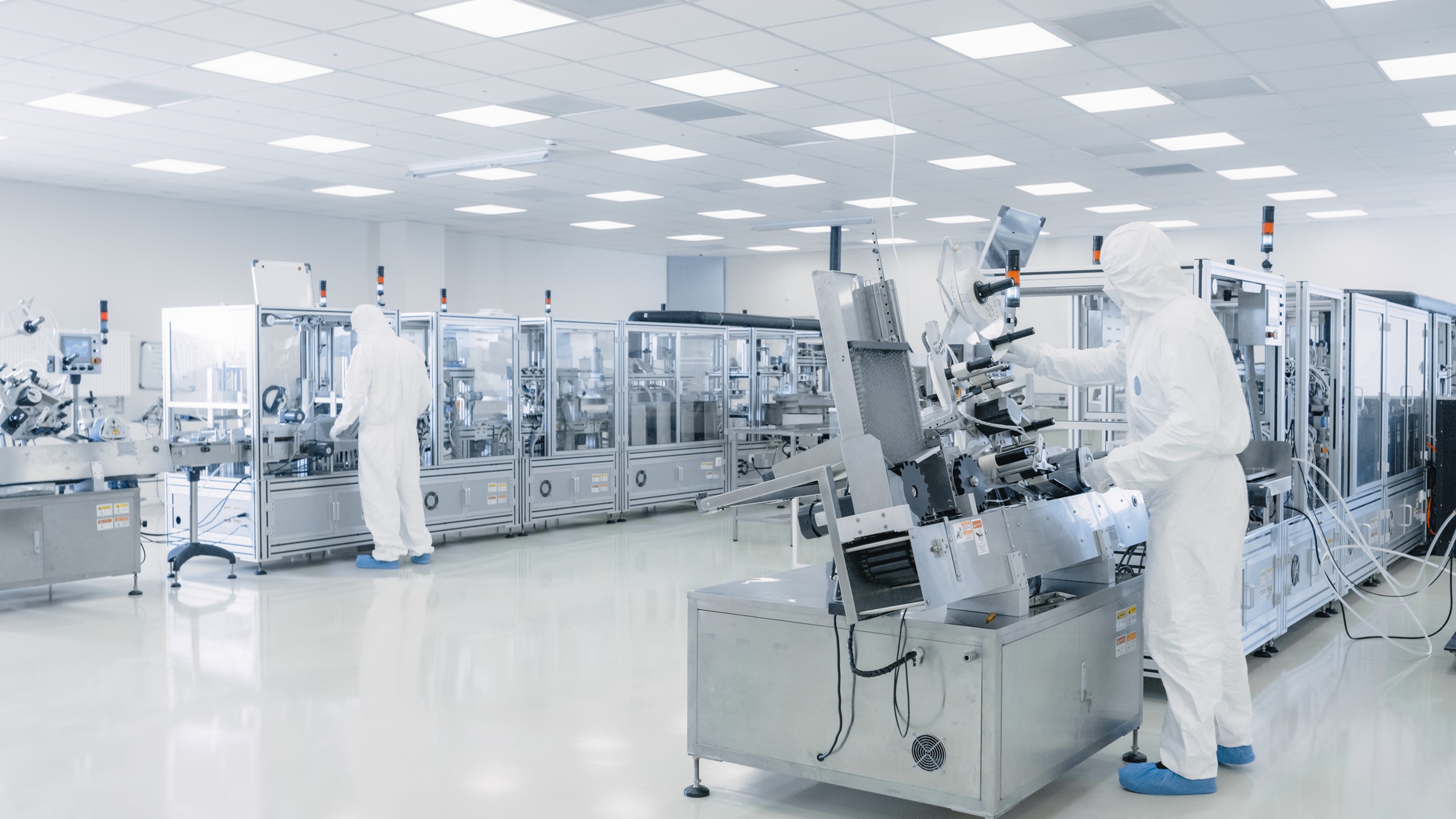
For pharmaceutical manufacturing, laboratory environments, and other process-critical spaces, the ability to deliver supply air at a precise, low dew point from the ventilation system simplifies the environmental control strategy. The building's air handling system manages temperature. The dedicated outdoor air system manages moisture. Absolute humidity and dry bulb temperature can be independently controlled.
When comparing outdoor air system options for a humidity-sensitive application, the relevant questions go beyond the nameplate cooling capacity: What supply dew point can the system deliver at summer design conditions, and how much electricity does it consume to get there? What happens to energy consumption and dew point performance at part-load conditions, which represent the majority of annual operating hours? Does the system recover its own waste heat for reactivation, or does it require an external energy source? Can it modulate moisture removal continuously from zero to full capacity through bypass damper and variable reactivation control, responding to dew point sensor feedback? Is it a single-source package with integrated controls, or does it require field coordination between separate cooling and desiccant components?
Sizing starts with the ventilation airflow required by ASHRAE 62.1, the outdoor design conditions for the building location, and the target supply dew point for the application.
| Application | Target Supply Dew Point | Key Considerations |
|---|---|---|
| Grocery and supermarket | 45–55°F | Refrigerated case condensation, defrost cycles, display fogging |
| Climate-controlled storage | 45–55°F | Door openings, product protection, mold prevention |
| Pharmaceutical manufacturing | 35–50°F | Process dew point requirements, cGMP validation |
| Office and institutional (chilled beam) | 50–55°F | Beam condensation prevention, occupant comfort |
| General commercial | 55°F | Mold prevention, building envelope protection |
The supply dew point target, outdoor design humidity, and required ventilation airflow determine the moisture removal rate. The system architecture determines how much energy it takes to get there. A hybrid desiccant system that recovers its own waste heat for reactivation will deliver that moisture removal at a lower energy cost per grain removed than a system that purchases reactivation energy separately. And where a conventional packaged system uses hot gas to rewarm overcooled supply air on the process airstream, the hybrid routes that same heat to a separate reactivation airstream, where it drives moisture out of the desiccant wheel.
The dedicated outdoor air system is typically the equipment used for humidity control in any commercial building where moisture matters. The energy efficiency of that system, measured as enthalpy reduction per unit of energy input, determines a significant portion of the building's long-term operating cost. A system that integrates DX refrigeration with desiccant dehumidification and recovers its own condenser heat for wheel reactivation produces more moisture removal and more total enthalpy reduction from each unit of energy consumed. That's the engineering case for hybrid desiccant outdoor air systems. Contact Desiccant Air Solutions at [email protected] to discuss system configuration, application-specific sizing, and energy performance for your project.
Desiccant Air Solutions designs and builds custom dehumidification systems combining cooling and desiccant technology for demanding industrial applications. Contact us at [email protected].

2026
Moisture trapped in a lithium-ion cell during assembly doesn't show up until the cell is in service. By then it's a warranty claim, a field failure, or worse.... Read more

2026
Condensation grows mold. In a brewery, every surface that stays wet after sanitation is a potential colonization site, and... Read more

2026
Ice buildup on floors, product, and dock doors is a safety hazard and an operating cost. Cold storage dehumidification elimin... Read more