In food manufacturing, uncontrolled humidity means condensation, contamination, and failed audits. We engineer the system that eliminates the variable.
Talk to an engineerWhen warm, humid air meets cold surfaces or product, you get condensation on equipment, on floors, on product. That condensation drives mold, bacterial growth, and failed audits.
Under FSMA preventive controls and HACCP requirements, condensation on food contact surfaces and overhead structure is a documented food safety hazard, not a maintenance inconvenience.
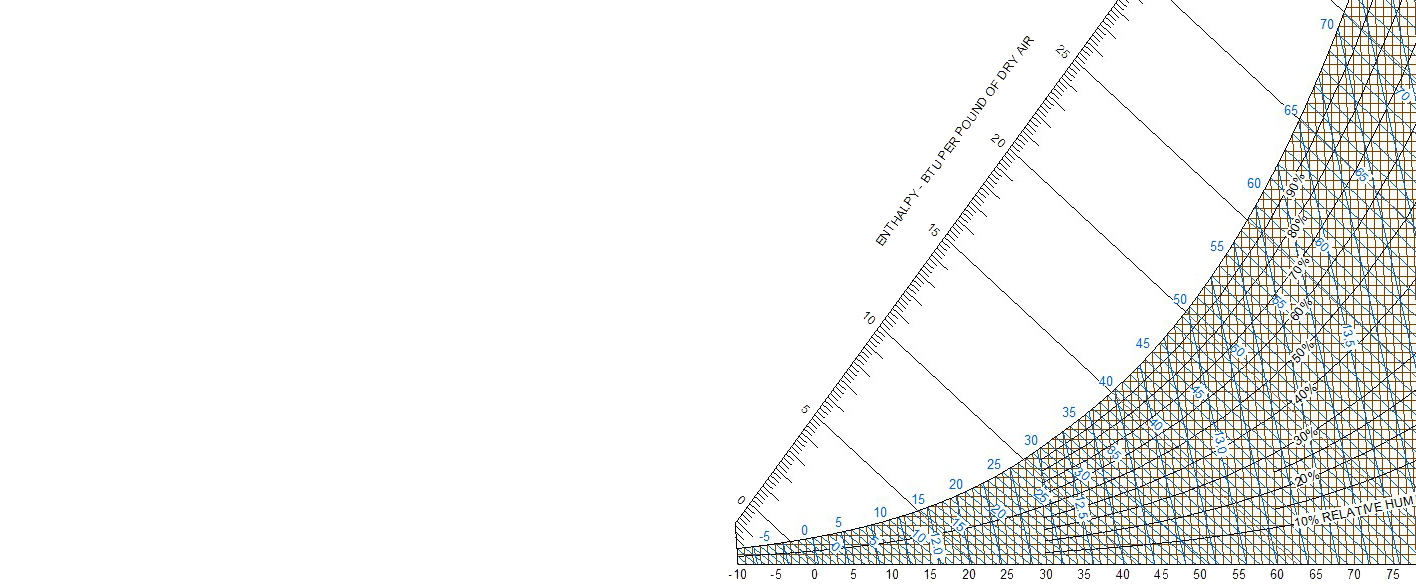
Refrigeration alone can't solve it. Below 45°F dew point, refrigeration-based dehumidification reaches its limit.
Most food processing environments require dew points between 30°F and 45°F, right at the threshold where refrigeration-only systems begin to fail.
The result: consistent dew points maintained even at low process temperatures, no frost on coils, no condensation on surfaces, and energy efficiency gains of 30-50%.
We work at the design stage to integrate humidity control into your process from the start, not bolt it on after you've already had a problem.
The hybrid advantage is in the energy integration: condenser reject heat from the refrigeration stage reactivates the desiccant wheel, turning waste energy into useful work. This is what drives the 30-50% efficiency gain compared to running refrigeration and desiccant systems separately.

Humidity control across processing lines, packaging areas, and production floors.
Condensation and contamination control in cold, high-moisture processing environments.
Preventing moisture-related quality failures and regulatory non-compliance.